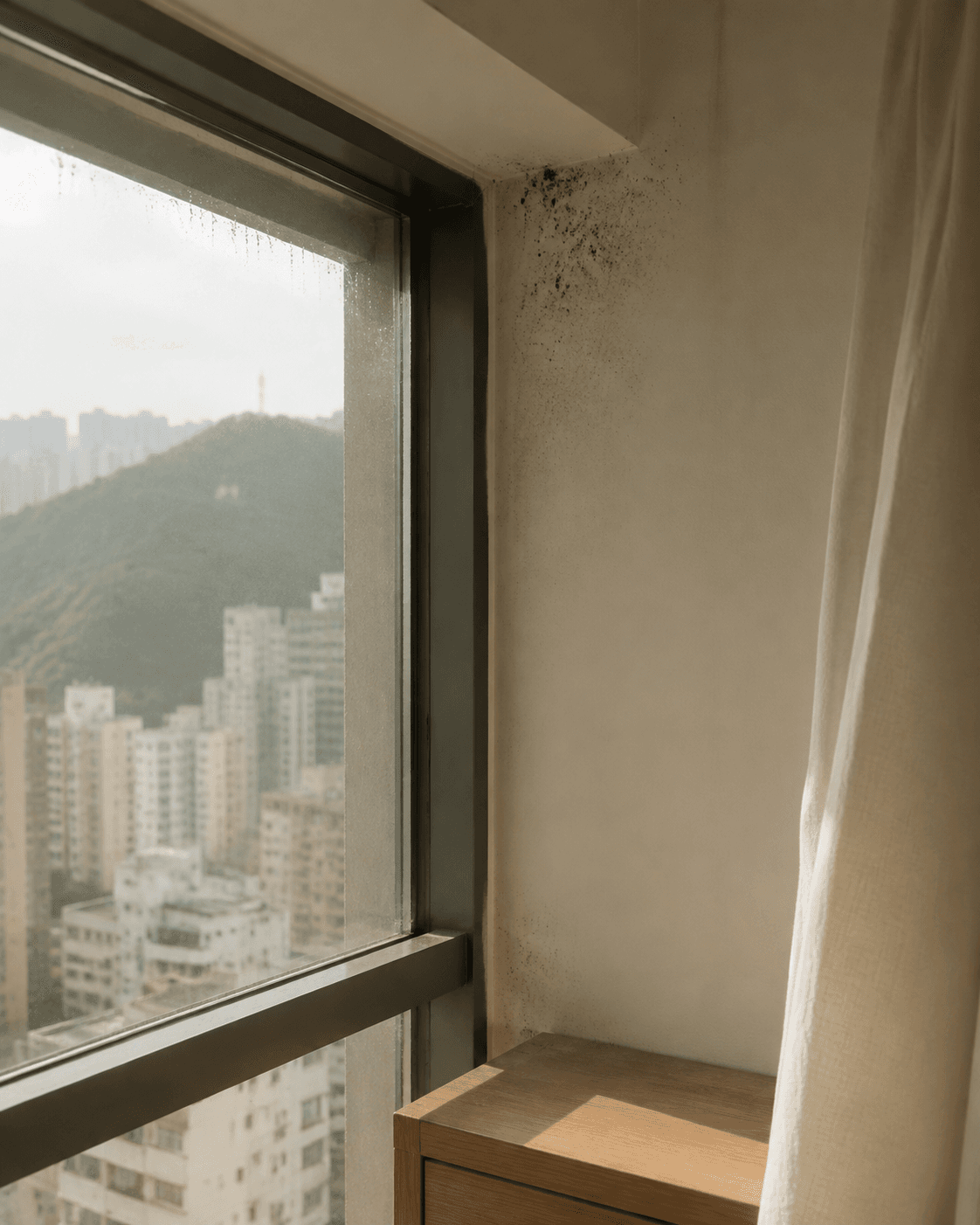
The short answer
Removal starts at HK$1,400, preventive coating at HK$700, and the combined service at HK$2,100. A starting price is not a fixed allowance for area, room count, leak investigation or repairs: we assess the affected location, surface, area, severity and visible moisture conditions before agreeing the work.
Photos help initially but may not establish a leak source. The coating warranty is 6–12 months, with coverage and exclusions explained at assessment and in the written quotation.
How we work
- Moisture checks: inspect ventilation, condensation and visible signs of leakage, and record likely causes. This forms part of the HK$350 on-site assessment, fully credited when treatment is booked. Any further leak investigation or repair is identified separately.
- Scope and quote: photos support the initial enquiry; the affected area, surface and severity are checked on site to confirm the work and cost.
- Mould removal. We use a method suited to the agreed scope and surface — wall, ceiling, bathroom tile or furniture — to treat visible mould.
- Preventive coating: an optional add-on with surface suitability and warranty terms explained. It does not replace leak repairs or moisture management.
- Humidity management advice. We leave you with practical steps — dehumidifying, ventilation, drying out water-damaged spots — to reduce the chance of mould returning at the source.
Mould cleanup and prevention: EPD guidance
Hong Kong’s Environmental Protection Department publishes indoor mould cleanup and prevention guidance. Key points include:
- Remove visible mould and identify and address the source of moisture.
- Keep indoor relative humidity below 70%; dry water-damaged areas within 24–48 hours.
- Consider a suitable or competent person for removal and refer to the EPD cleanup guidance linked below.
- Since July 2019, mould has been a parameter in the Indoor Air Quality Certification Scheme for offices and public places.
Sources: EPD indoor mould booklet and Mould and You leaflet. These are cleanup and prevention guidelines, not a service deadline or health-outcome promise. Seek medical advice for symptoms.
Removal and preventive coating prices
These are Averta’s three starting prices. Removal and preventive coating are different services; the assessment establishes which work is needed.
| Tier | From | Includes |
|---|---|---|
| Preventive coating | HK$700 | Surface cleaning + preventive coating application |
| Mould removal | HK$1,400 | Treatment of visible mould within the agreed scope |
| Removal + prevention (full package) | HK$2,100 | Removal + preventive coating |
The actual quote depends on two factors:
- Unit area — a larger affected area means more labour and materials.
- Severity (light/moderate/severe) — surface mould spotting is a different job from mould that's penetrated the wall or caused paint to peel.
The coating warranty is 6–12 months, with free re-treatment at the same spot during the applicable period. The written quote separately states removal, any optional preventive coating, follow-up for moisture or leakage issues, and repairs outside the treatment scope where applicable, as well as duration, locations and exclusions.
When mould risk peaks: 回南天 and the wet season
Hong Kong's Observatory explains "回南天" (huínántiān) as what happens when the winter monsoon weakens and warm, moist southerly marine air meets surfaces — walls, floors — that haven't warmed up yet, causing condensation to form on them, typically during the winter-to-spring transition. This is one driver of Hong Kong's spring damp-and-mould problem, and it extends into a longer wet-season window of elevated humidity. For live and seasonal humidity data, see our Hong Kong Humidity Tracker.