AFCD-registered products onlyTransparent pricingAll 18 HK districtsFree follow-up within warranty

HOTELS & GUESTHOUSES

Pest Control for Hotels and Guesthouses: The Question Isn't Whether Bed Bugs Arrive — It's How Fast You Catch Them

Quick answer

Anyone running a hotel or guesthouse already knows: bed bug risk comes bundled with occupancy — the higher your turnover, the more chances there are for luggage to bring them in. That's not something you can eliminate, only manage. What changes the outcome is how fast you catch it. Catch it on night one and you're dealing with one room. Catch it after a guest complains and you're dealing with a cluster of neighbouring rooms, lost room-nights, and your reviews. That's why our hospitality program isn't a call-us-when-there's-a-problem service — it's a check built directly into your existing housekeeping workflow. One extra step at checkout cleaning, using the same inspection logic as CHP's travel guidance, done in under a minute.

What the program covers

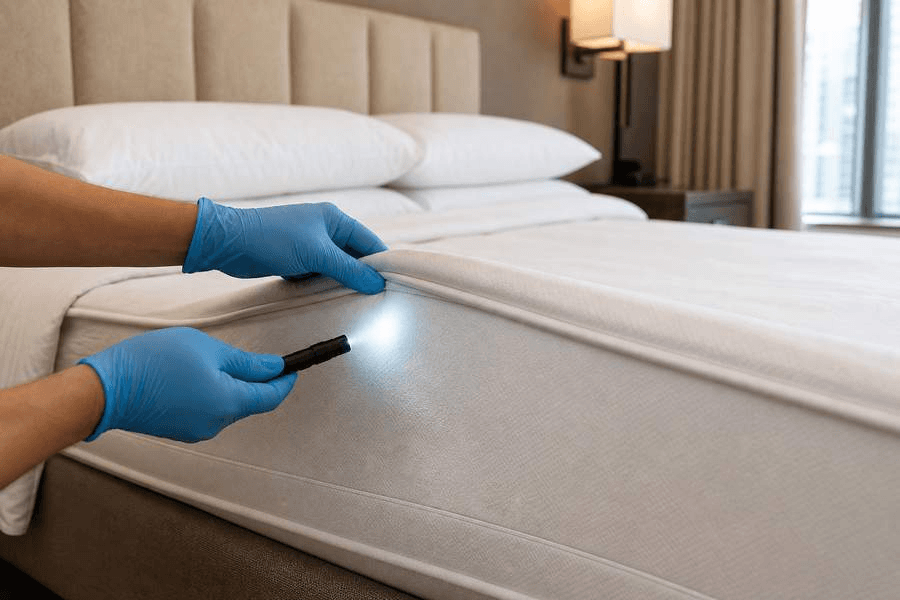
  • Housekeeping-embedded checks — we train your housekeeping team on a hotel-specific check that's different from a standard home self-check: bed frame joints, around luggage racks and stands, skirting and carpet edges — exactly where luggage gets set down and bugs first land. Anything suspicious gets flagged immediately, no need to wait for a guest complaint.
  • Post-discovery isolation procedure — a written SOP: which room gets closed off, how many neighbouring rooms get checked, how linen is handled, and when the room can reopen. Having a procedure means no one has to improvise under pressure.
  • Scheduled professional inspections — frequency set by room count and turnover rate, with higher-risk room types (near lifts, near luggage storage) checked more often.
  • Treatment and follow-up — for confirmed cases: work done outside guest hours, follow-up scheduled around the egg-hatching cycle, and full records kept (room number, date, pesticide registration number, recheck result).
  • Other pests, covered too — kitchen cockroaches, rooftop mosquitoes, warehouse rodents: hospitality isn't just about bed bugs.

Why build it into housekeeping?

Because professional inspection frequency can never keep pace with guest turnover — we might visit once a month, but your rooms see new luggage every single day. Embedding a one-minute check into checkout cleaning means every room gets screened at every turnover. Our role shifts to training, spot-checking, and handling whatever gets flagged. That's the only structure that can actually keep pace with a hospitality operation.

One assessment tells you exactly where your bed bug risk stands

Frequently asked questions

How would housekeeping staff even know if they've found bed bugs?

Training plus spot-checks: half a day of training covering the hotel-specific check points and how to identify the physical evidence — live insects, shed skins, blood spots, faecal spots — followed by regular spot-checks of rooms afterward. The point isn't to make them experts; it's to make sure they flag anything suspicious.

If we find bed bugs, do we need to close a whole floor?

No need to overreact — but act on procedure immediately: close and treat the affected room, check the rooms next door and across the hall, and bag linen separately for hot treatment. The whole point of having a procedure is not having to guess in the moment.

A guest complains of being bitten but we can't find anything — what then?

Follow the procedure regardless: a thorough inspection of the room plus preventive treatment, with the result on record — that record is what backs you up with the guest and with any platform dispute. The bites could also be from mosquitoes or something else entirely, but in hospitality it pays to treat every report seriously.

Does this work for serviced apartments or co-living spaces?

Yes, and arguably it matters even more — mixed long and short stays, and guests bringing their own furniture, both widen the risk. The program adjusts check frequency to match your turnover pattern.

WhatsApp QuoteCall