The short answer
Bed bugs can't fly, can't jump, and don't travel far on their own — so almost every infestation is one that someone brought in: in luggage from a trip, in second-hand furniture, in a bag of clothing, or through a gap in the wall or pipework shared with a neighbouring flat. It has nothing to do with how clean a place is: a five-star hotel and a modest flat are equally exposed.
Worth knowing too: in Cantonese they go by several names — 床蝨, 木蝨, 臭蟲 — all the same insect, per the Centre for Health Protection. Once you know how they get in, you know where to block them.
The five routes below, each with its own fix.
The 5 routes in — and how to block each one
| Route | Situation | How to block it |
|---|---|---|
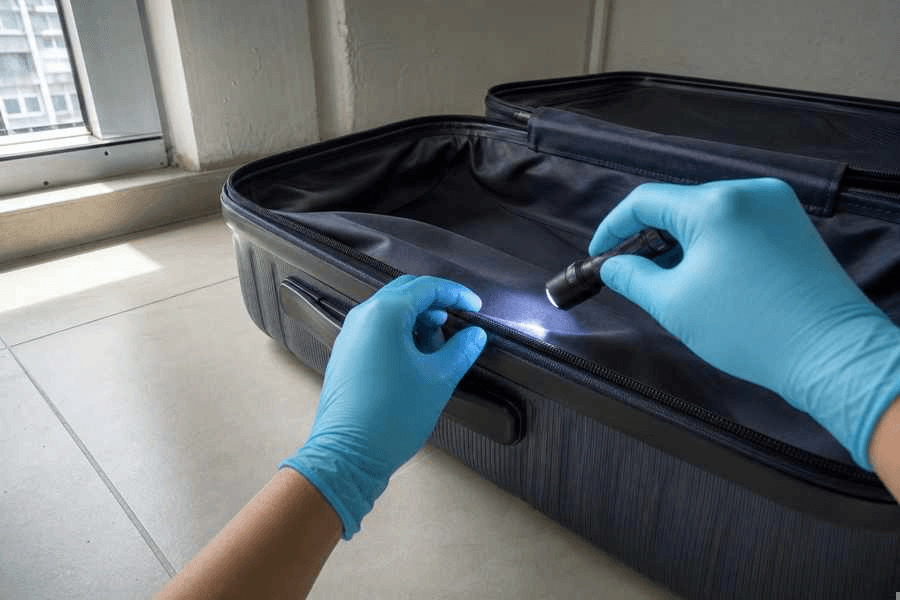
| ① Travel luggage | Bed frames or mattresses at your accommodation carry bed bugs that crawl into luggage seams | Follow CHP's three-step travel guidance: hard-shell luggage, sealed bags, check the mattress before settling in, keep luggage off the floor, hot-wash or steam-treat once home |
| ② Second-hand furniture | Bed bugs and eggs hide in the seams of second-hand sofas, bed frames and mattresses | Inspect every seam before bringing in a second-hand sofa or bed frame; don't bring home furniture picked up off the street without checking it first |
| ③ Clothing and bags | Picked up from visits, cinemas, or public transport upholstery | After a higher-risk outing, put your coat or bag straight into a laundry bag for a hot wash; don't toss it on the bed |
| ④ Shared laundry | Cross-contamination at laundrettes or shared machines | Carry items in your own bag, dry on full heat; fold clothes only once you're home |
| ⑤ Spread from neighbours | An infested neighbouring flat spreads via wall gaps, pipework or door gaps | Seal gaps around pipe penetrations and walls; if there's a known case in the building, check your own flat early |
(Each route carries different weight depending on your habits — someone who travels constantly and someone who collects second-hand furniture regularly should each prioritise differently.)
What happens once they're in?
It only takes one or two egg-carrying bed bugs to start an infestation. They look for gaps close to where you sleep — the seam along a mattress edge, bed frame joints, behind a headboard — because that's where the food (you) is. Early on there's barely any sign, and by the time you notice a line of bites, there's usually already more than one or two. That's why checking early is the cheapest step you can take: our bite comparison guide has a five-minute self-check.
Confirmed an infestation — what now?
Spraying insecticide yourself usually just scatters an infestation rather than clearing it — bed bugs hide deep and their eggs are protected from contact sprays. See our bed bug service page for details. Bed bug treatment with Averta starts from HK$2,980 (one-bedroom flat, two visits with warranty included); inspection is HK$350, fully credited when you book.