Mixed-use buildings
Homes above a wet market, offices above a restaurant: if the source is downstairs, treating a single unit gets undone fast; commercial premises are always treated outside trading hours, with a service record provided.
DISTRICT
Wan Chai District's defining feature is how much gets stacked on top of itself: wet markets, restaurants, offices and homes sit directly above or beside one another, a genuinely dense mixed-use belt.
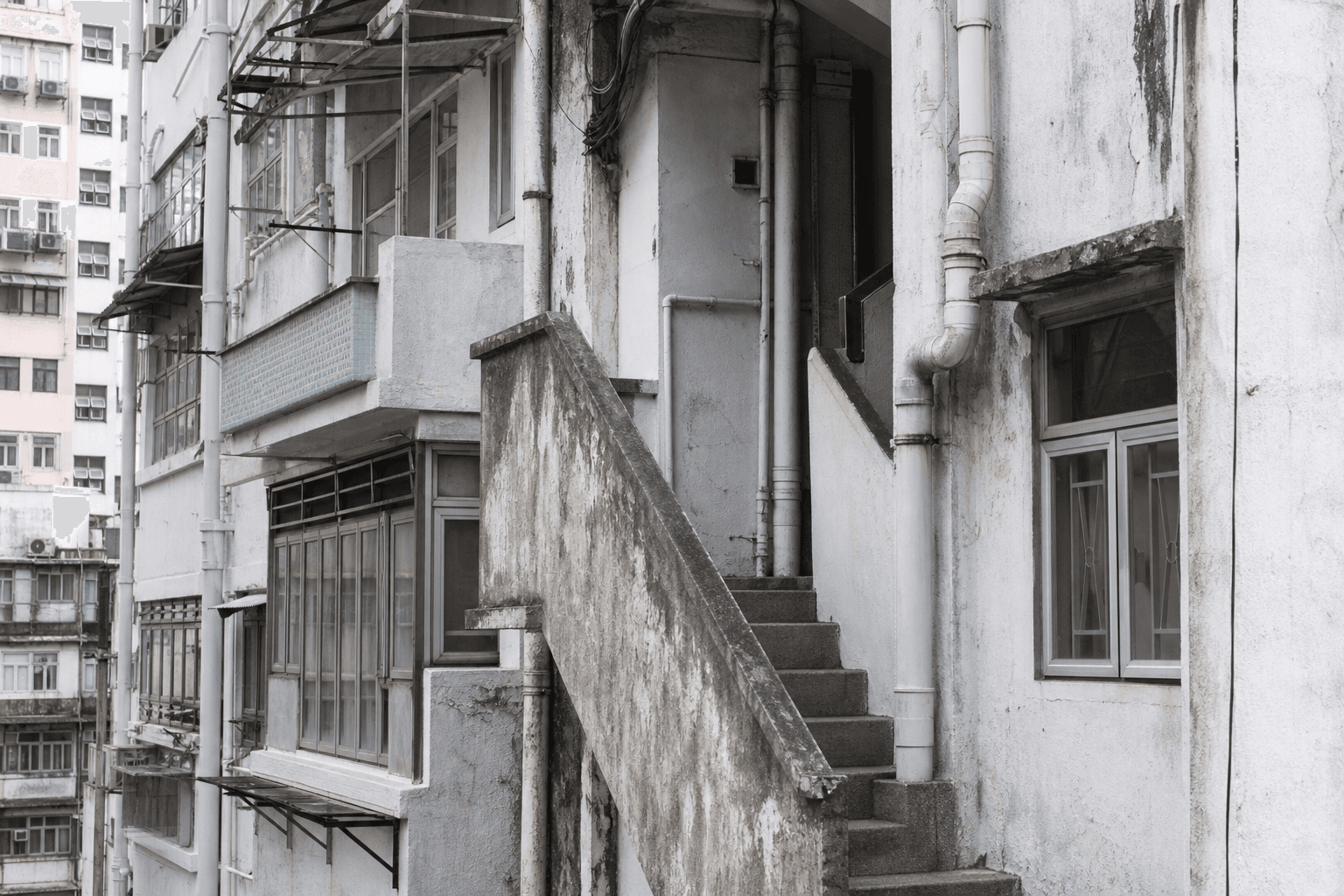
Head further south and the picture flips entirely — Happy Valley's low-rise houses and standalone homes sit alongside Tai Hang's older neighbourhood, where traditional community life and newer housing exist side by side. One district, two genuinely different living environments.
FEHD has three survey areas in Wan Chai District: Tin Hau and Causeway Bay, Happy Valley and Tai Hang, and Wan Chai. The first two varied between May and July: Tin Hau and Causeway Bay was 8.8% in May and 5.8% in July, while Happy Valley and Tai Hang was 16.7% in May and 5.1% in July.
In August 2026, the three areas recorded 3.8%, 2.6% and 0.9% respectively; these are survey-area readings, not figures for the whole district.
Homes above a wet market, offices above a restaurant: if the source is downstairs, treating a single unit gets undone fast; commercial premises are always treated outside trading hours, with a service record provided.
Concentrated goods flow and wastewater mean structurally elevated cockroach and rodent pressure; sealing comes first, followed by a residual barrier.
Lower density with more gardens and terraces actually means standing water is spread across more spots — planter beds, awnings and light wells all need individual checking.
Older housing stock alongside traditional community life, with higher average building age and drainage that's often shown its years; sealing entry routes and residual treatment are the basics here.
Wan Chai, Causeway Bay, Happy Valley, Tai Hang and Tin Hau — mixed-use buildings, wet market shops, and standalone houses all covered.
Averta's published prices are the same across all 18 districts: cockroaches/ants from HK$980, rodents from HK$1,680, bed bugs from HK$2,980, termites from HK$3,380; a Wan Chai District home inspection is HK$350, fully credited when you book. Wet market shops and offices are quoted after we see the site, and after-hours visits can be arranged.
It depends on location: pests in a public space like a street or park can be rep…
Responsibility for pests inside a private flat mainly comes down to what your te…
As of July 2026, typical market ranges for home pest control in Hong Kong: cockr…
Not necessarily your fault — it's a source problem. In units above a wet market, the goods and wastewater environment downstairs is effectively a rodent and cockroach supply line, and treating a single unit only ever holds the line at your own entry points, not the source. The approach is sealing every entry point in your unit — drains, pipe gaps, door gaps — plus a residual barrier, so your unit becomes the hardest one to get into. The source itself needs to be raised with building management or ownership.
The district has three FEHD survey areas: Tin Hau and Causeway Bay, Happy Valley and Tai Hang, and Wan Chai. In August 2026 they recorded 3.8%, 2.6% and 0.9% respectively; the May-to-July history also differs by area. No one reading covers the whole district. The latest monthly figures are on our mosquito index tracker.
Two completely different approaches. Happy Valley's low-rise houses spread their standing water risk across gardens, awnings and light wells, so inspection means checking each spot individually. Tai Hang's older neighbourhood has structural issues that come with building age — ageing drainage and wooden structures are common — so sealing entry routes is step one. At inspection we adjust the focus to your building type rather than running one approach for everyone.