Warehouse rodents
Goods flow is the rodent route: under pallets, behind racking, above false ceilings are the highways; the approach is monitoring points, sealing and bait-station layout, designed around the warehouse's own turnover rhythm.
DISTRICT
Pest problems around Tsuen Wan and Kwai Chung mostly move around because goods do. The area around the Kwai Chung Container Terminal is one of Hong Kong's largest logistics and warehousing belts, with containers, pallets and cardboard moving through every day — all of it a ride for rodents and stored-product pests.
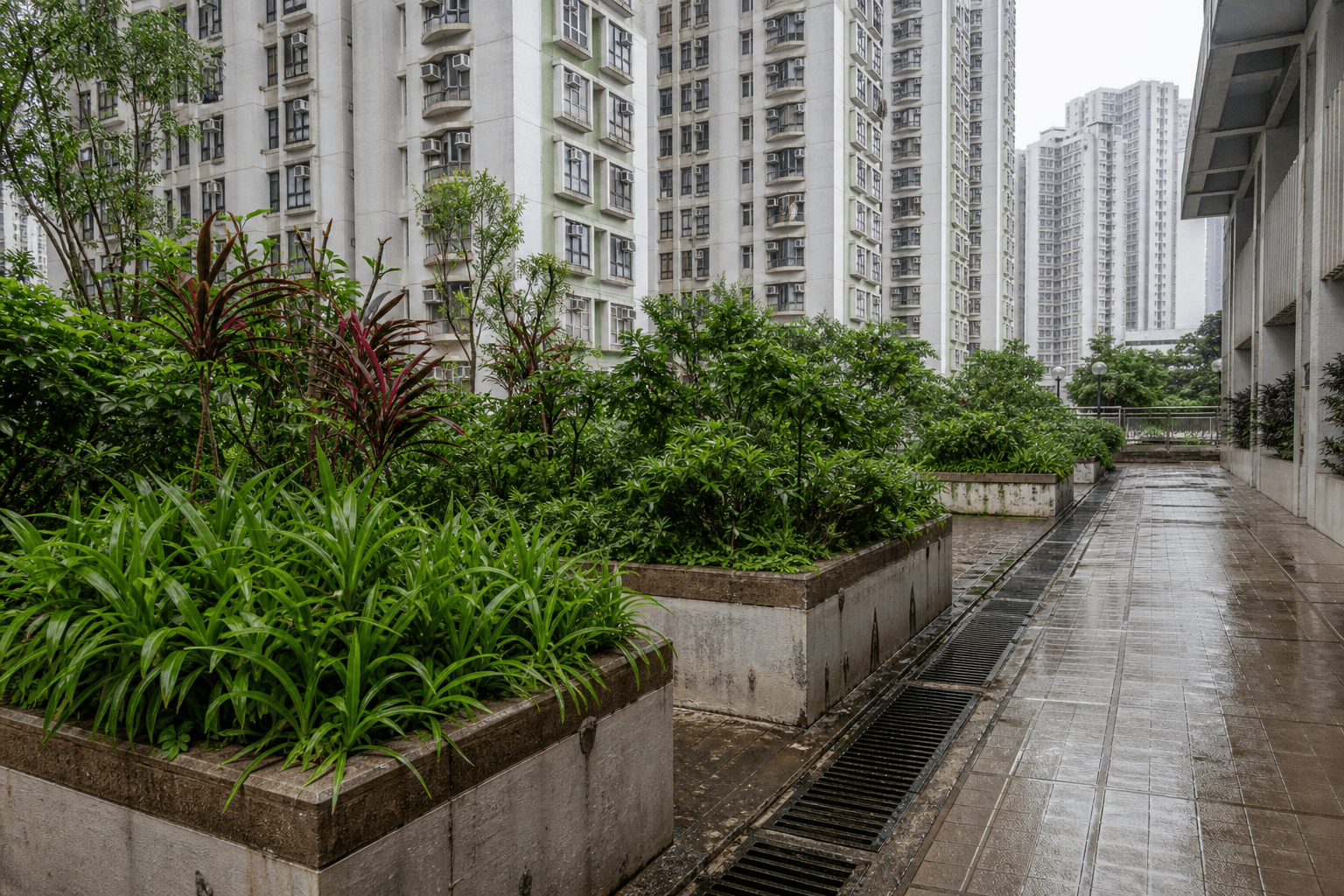
Old Tsuen Wan (around Chuen Lung Street and Yuen On Street) is a different ecosystem entirely: tong lau, wet markets and restaurants sitting shoulder to shoulder with a run of new-build towers next door; and industrial buildings are increasingly mixed use, with studios, mini-storage and food workshops sharing the same floors. Mosquitoes have a number attached too — but it needs the right label: the neighbouring Kwai Tsing district's Kwai Chung West recorded a monthly combined index of 15.6% (Level II) in July 2026, while Tsuen Wan Town Centre itself came in at 6.9%.
Pest control here means telling apart what's a residential problem and what's a goods-movement problem. In August 2026, Tsuen Wan Town recorded 5.1%, while Kwai Chung West in neighbouring Kwai Tsing District recorded 7.8%; they are readings from different survey areas.
Goods flow is the rodent route: under pallets, behind racking, above false ceilings are the highways; the approach is monitoring points, sealing and bait-station layout, designed around the warehouse's own turnover rhythm.
A food workshop upstairs, mini-storage downstairs: one unit with a problem affects the whole floor; industrial cases get the shared spaces checked too — corridors, goods lift lobbies, refuse rooms.
Structural cockroach and rodent pressure; residential units get sealing first, shop units are treated outside trading hours.
A new building doesn't mean no pests: renovation materials and cardboard are an easy way for cockroaches and bed bugs to get in; a pre-move-in inspection is far cheaper than dealing with it after.
Tsuen Wan Town Centre, Tsuen Wan West, Kwai Chung (upper, middle and lower), Tsing Yi, Ma Wan and Sham Tseng — homes, industrial buildings, warehouses and shops all covered.
Averta's published prices are the same across all 18 districts: cockroaches/ants from HK$980, rodents from HK$1,680, bed bugs from HK$2,980, termites from HK$3,380; a Tsuen Wan/Kwai Chung home inspection is HK$350, fully credited when you book. Warehouse, industrial and commercial premises are quoted after we've seen the site, and after-hours visits can be arranged.
It depends on location: pests in a public space like a street or park can be rep…
Responsibility for pests inside a private flat mainly comes down to what your te…
As of July 2026, typical market ranges for home pest control in Hong Kong: cockr…
Because the nest may not even be in your warehouse — containers and pallets move in and out daily, and rats travel with the goods. Warehouse rodent control isn't really about finding one nest; it's monitoring-point placement plus entry sealing plus goods-flow management, designed around how your warehouse actually operates.
Shared areas — corridors, goods lifts, refuse rooms — go through the building management; your own unit is on you. For food workshops we work outside trading hours and provide a record (useful for hygiene inspections); coordinating with the unit next door makes both the results and the cost much better.
That reading belongs to the neighbouring Kwai Tsing district's monitoring station — 15.6%, Level II, July 2026. Tsuen Wan Town Centre's own figure is 6.9%. The two areas sit next to each other with similar environments, so the reference value is the same either way: standing water at the source is what matters. The latest figures are updated monthly on our mosquito index tracker.
Worth doing an inspection: renovation materials, cardboard and furniture deliveries are all ways pests get in, and handover-stage units that sit empty for a while are prone to standing water and mosquitoes. Inspection is HK$350, fully credited when you book — cheaper before move-in than chasing it after.