Cockroaches and rodents in tong lau
Wooden structures, ageing drainage, and connected back lanes: sealing entry routes is step one, treating inside the flat is only the second half of the job.
DISTRICT
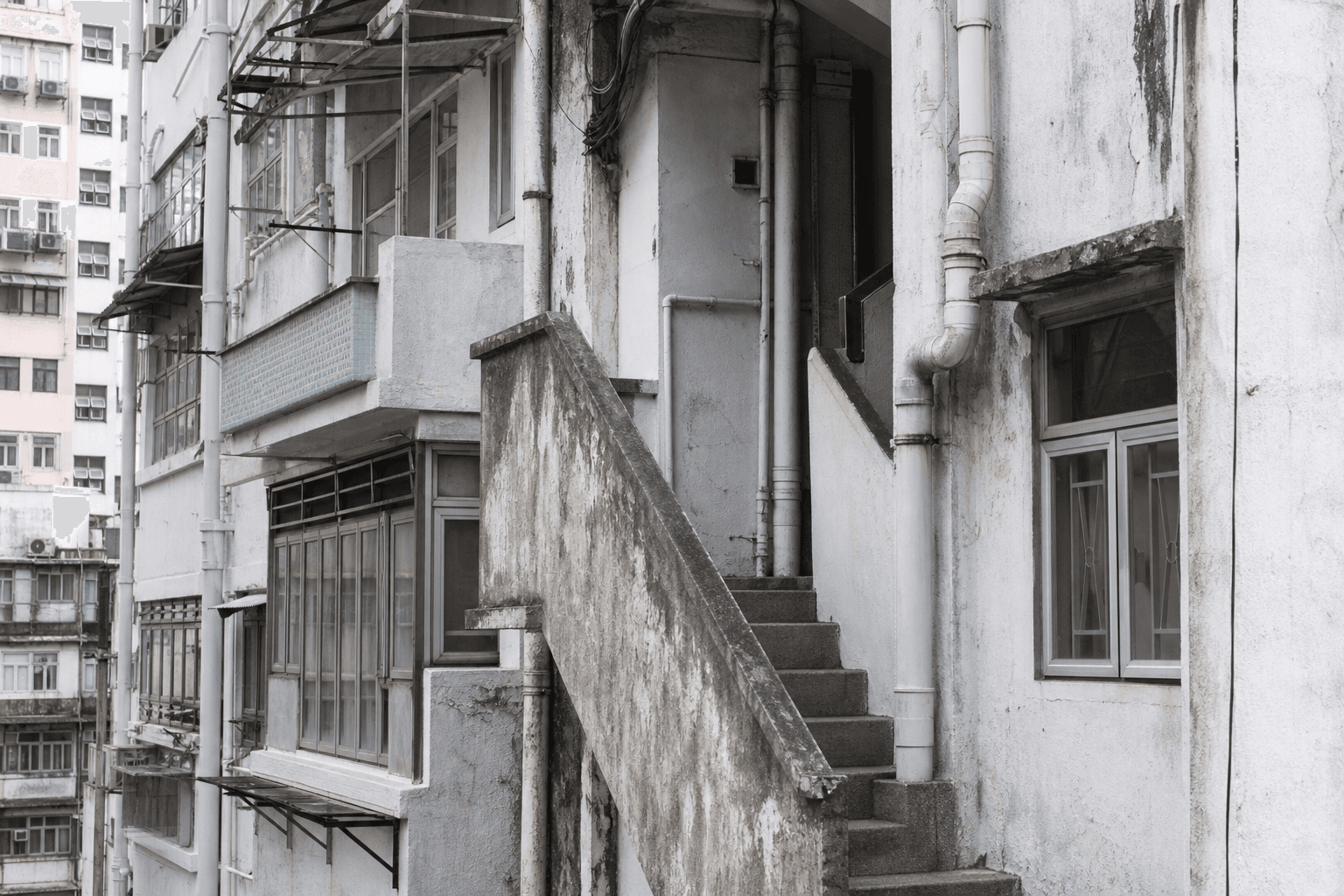
If Sham Shui Po's pest problems come down to one thing, it's building age. This is home to some of Hong Kong's oldest tong lau blocks — wooden staircases, shared drainage, connected back lanes, and subdivided units are all common — and the cockroach and rodent networks running through them have been decades in the making.
Add the wholesale and retail goods flow around Apliu Street and Yu Chau Street, and one hard number: FEHD's mosquito-trap index recorded a monthly combined 32.1% at Cheung Sha Wan in July 2026 — Level III, the highest of all 62 monitoring areas that month, and up from June's 29.2%. Yet the neighbouring Sham Shui Po and Shek Kip Mei stations, the same month, only reached 4.9% — more than a sixfold difference across one street.
Pest control here can't run on one approach for the whole district. In August 2026, Cheung Sha Wan recorded 9.3% and Sham Shui Po and Shek Kip Mei 4.2%; both are survey-area readings, not figures for the whole district.
Wooden structures, ageing drainage, and connected back lanes: sealing entry routes is step one, treating inside the flat is only the second half of the job.
One unit affected can mean the whole floor is affected; we treat entry points unit by unit and can advise on coordinating with neighbouring units (without coordination, it comes back fast).
Older buildings with high tenant turnover are a higher-risk combination; if you suspect an infestation, run the five-minute self-check early.
The index reading is high, and it's low-rise and rooftop residents who feel it most; standing water in back-lane drains and rooftop clutter is the main front.
According to FEHD's Area Gravidtrap Index (compiled by Averta Pest Control, as of 2026-08), Cheung Sha Wan recorded the highest August reading in Sham Shui Po at 9.3% — ranked 11 of all 62 monitoring areas territory-wide.
左右捲動查看完整圖表 ↔Scroll sideways to see the full chart ↔
FEHD Rodent Reference Index 2023: Sham Shui Po annual 1.2% (H1 1.8%, H2 0.6%), ranked 17 of 19 survey divisions. Hong Kong has only ~50 monitoring points in total and some divisions have exactly one — a limitation worth citing alongside any ranking.
Full datasets: Hong Kong mosquito index · Hong Kong rodent index
Sham Shui Po, Cheung Sha Wan, Lai Chi Kok, Shek Kip Mei and Yau Yat Chuen — tong lau, subdivided flats and commercial or industrial units all covered.
Averta's published prices are the same across all 18 districts: cockroaches/ants from HK$980, rodents from HK$1,680, bed bugs from HK$2,980, termites from HK$3,380; a Sham Shui Po home inspection is HK$350, fully credited when you book. Subdivided flats are quoted based on actual scope, explained item by item at inspection.
It depends on location: pests in a public space like a street or park can be rep…
Responsibility for pests inside a private flat mainly comes down to what your te…
As of July 2026, typical market ranges for home pest control in Hong Kong: cockr…
Yes — but aim for the right target. What you can control is whether pests can get into your unit. Sealing drains, pipe gaps, door gaps, plus a residual barrier, stops entry. Whole-building treatment needs the owners' corporation or the block owner to act — we also run whole-tong-lau programs and can help you estimate the scope.
Very common. The approach is to make your unit as tight as possible on its own: seal every entry point, clear hiding spots, and turn your unit into the hardest one on the floor to get into. At inspection we'll spell out in writing what's within your control and what needs coordination.
There's a number behind it: FEHD's monthly combined index recorded 32.1% at Cheung Sha Wan in July 2026, Level III — the highest of all 62 monitoring areas that month, and up from June's 29.2%. But the neighbouring Sham Shui Po and Shek Kip Mei stations recorded only 4.9% the same month — more than a sixfold difference across one street. The difference comes down to standing water: back-lane drains and rooftop clutter are the main front, and in-unit prevention only treats the symptom.
Yes. For high-goods-flow shops, the focus is on stock movement and storage areas — cardboard is a five-star hotel for cockroaches and rodents; work is done outside trading hours, with a service record provided.