Pest Control in Kowloon City: One of Hong Kong's Higher Rodent Readings Meets a Dense Old-Tenement Food Street
Kowloon City District recorded a 5.4% annual Rodent Infestation Rate in 2023, the third-highest of FEHD's 19 monitoring districts, behind only Wan Chai and Yau Tsim.
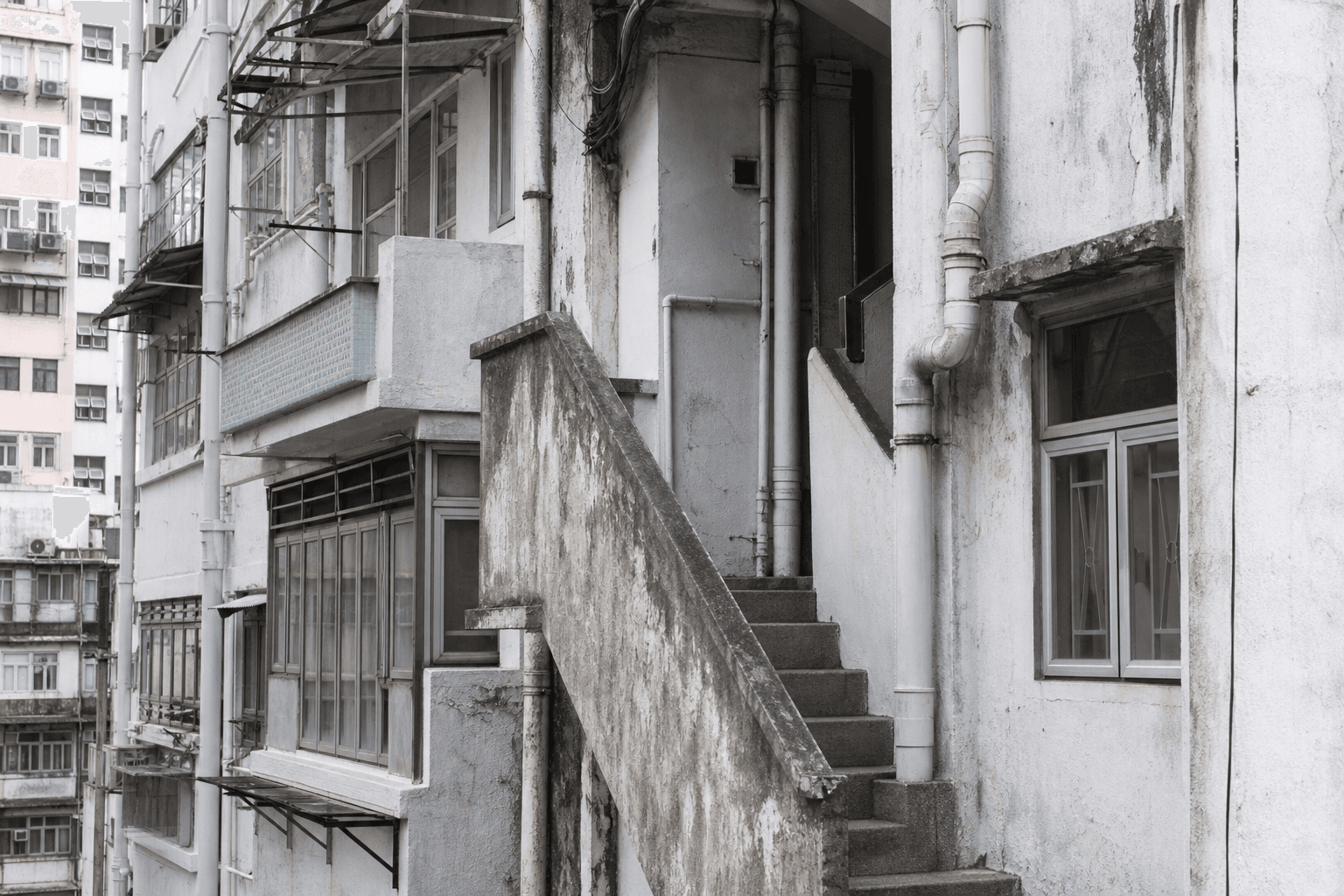
AI-generated housing-type illustration, not a photograph of this district or a customer job.
District context and pest patterns
Add in the pre-war tenements and dense restaurant strip around Kowloon City proper, the mixed old-and-new redevelopment zone in Hung Hom and To Kwa Wan, and Kai Tak's July mosquito index of 24.2% — the second-highest in Hong Kong that month — and this district needs a sub-area-by-sub-area read. In August 2026, Hung Hom and To Kwa Wan recorded 15.0% and Kai Tak 14.6%; these are survey-area readings, not figures for the whole Kowloon City District.
Local pest reality
Kowloon City's food street and old tenements
The strip around Nga Tsin Wai Road and Nam Kok Road is dense with restaurants, and pre-war tenements here have timber staircases and connected back lanes, so cockroach and rodent routes often run through shared piping. Restaurant density is a structural source of pressure, and treating a single unit gets undone fast — these cases need barrier-style treatment plus regular follow-up.
Hung Hom and To Kwa Wan redevelopment
Residential and industrial uses sit side by side, and parts of the area are in active redevelopment with new and old buildings coexisting. Demolition work during redevelopment often disturbs rodents in nearby buildings; the Hung Hom and To Kwa Wan monitoring area already recorded 1.8% on the mosquito index in January, while most other areas that batch sat at 0.0%, suggesting standing water needs attention earlier in the year here.
Kai Tak's July spike, with Hung Hom and To Kwa Wan elevated too
Kai Tak's mosquito index sat at 9.4% in June, then jumped to 24.2% in July — the second-highest reading in Hong Kong that month, Level III (widespread distribution) — while Hung Hom and To Kwa Wan reached 18.1%. A new development area's podium greenery and construction sites make standing-water management especially important. Ho Man Tin and Kowloon Tong hit 23.6% and 23.4% back in May but had eased to 8.9% and 9.1% by July — proof of how much these readings move month to month.
The district's third-highest rodent reading
Kowloon City District's 2023 annual reading of 5.4% trails only Wan Chai (13.0%) and Yau Tsim (8.3%), and touched a high of 6.2% in 2019 within the 2016–2023 span. That reading is consistent with the density of old tenements and restaurants here, worth extra attention from residents — but it's also worth remembering the index draws on only around 50 monitoring points territory-wide, not a door-to-door survey. See our rodents page for prevention basics.
Kowloon City pest risk brief (as of 2026-08)
According to FEHD's Area Gravidtrap Index (compiled by Averta Pest Control, as of 2026-08), Hung Hom and To Kwa Wan recorded the highest August reading in Kowloon City at 15.0% — ranked 3 of all 62 monitoring areas territory-wide.
左右捲動查看完整圖表 ↔Scroll sideways to see the full chart ↔
Ho Man TinHung Hom and To Kwa WanKai TakKowloon CityKowloon Tong
FEHD Rodent Reference Index 2023: Kowloon City annual 5.4% (H1 7.4%, H2 3.4%), ranked 3 of 19 survey divisions. Hong Kong has only ~50 monitoring points in total and some divisions have exactly one — a limitation worth citing alongside any ranking.
Kowloon City, Ho Man Tin, Hung Hom, To Kwa Wan, Kai Tak, Kowloon Tong and the Kowloon City Road area — old tenements, restaurants, estates and mixed commercial-residential buildings all covered.
Pricing
Averta's published prices are the same across all 18 districts: cockroaches/ants from HK$980, rodents from HK$1,680, bed bugs from HK$2,980, termites from HK$3,380; a Kowloon City District home inspection is HK$350, fully credited when you book. Restaurants and back-lane-connected shops are quoted based on the site, and we can schedule work outside trading hours.
Kowloon City's rodent index is supposedly the third-highest in Hong Kong — is that really as bad as it sounds?
The data backs it up. FEHD's Rodent Infestation Rate for Kowloon City District was 5.4% in 2023, the third-highest of all 19 FEHD monitoring districts, trailing only Wan Chai (13.0%) and Yau Tsim (8.3%). That's consistent with the density of pre-war tenements and restaurants in the area, but the index draws on only around 50 monitoring points territory-wide — not a door-to-door survey — so actual risk still depends on your own building's structure and drainage.
I run a shop near Kowloon City's food street — what should I watch for with pest control?
The biggest issue in a dense restaurant strip is that the source is often right next door — treating a single shop alone gets undone fast, so these cases need barrier-style treatment plus regular follow-up to hold. We always schedule work outside your trading hours and provide a service record to help you meet licensing and hygiene inspection requirements.
Where in Kowloon City District is the mosquito index highest?
It depends on the month. In May it was Ho Man Tin (23.6%) and Kowloon Tong (23.4%) — but both had eased to 8.9% and 9.1% by July. July belonged to Kai Tak: 9.4% in June, jumping to 24.2% in July, the second-highest in Hong Kong that month, with Hung Hom and To Kwa Wan at 18.1%. The readings move a lot month to month, so no single month describes the whole district. Wherever you are, managing standing water in podium gardens, rooftops and planter trays is the key lever — indoor mosquito products alone won't fix the source.