The short answer
There's no single answer to who's responsible for mould in a rented Hong Kong flat — the tenancy agreement comes first: as CLIC (the Community Legal Information Centre) puts it, repair obligations are mainly a matter of private contract, and there is generally no implied duty under a tenancy agreement compelling either party to carry out repairs. Where the agreement is silent, general practice looks at the cause: mould from ordinary humidity-driven wear and tear tends to be treated as within the landlord's responsibility; mould caused by tenant negligence or deliberate action (long-term lack of ventilation, failing to report a known leak) tends to be treated as the tenant's; and mould caused by a structural leak or building disrepair generally falls under the landlord's repair obligations — and government-issued repair orders almost invariably land on the registered owner. This article is not legal advice — individual cases depend on the tenancy agreement and the specific facts; for a dispute, see CLIC's repair/maintenance obligations page or seek professional legal advice.
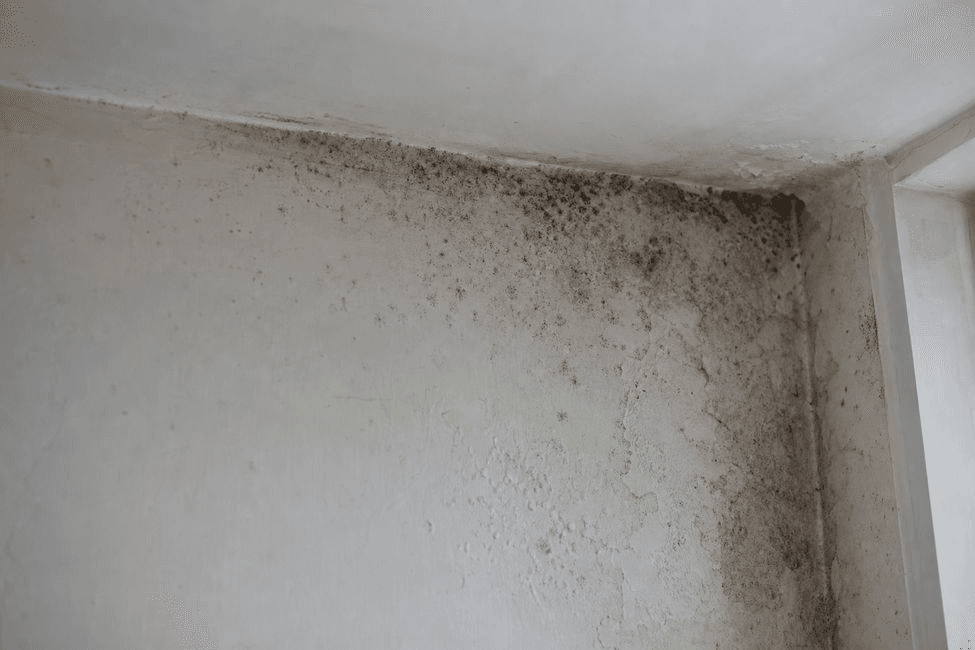
Scenario one: ordinary humidity / wear and tear
Hong Kong is humid, especially during the 回南天 and wet seasons, and mould can appear even when nobody has done anything wrong. This is generally treated as "wear and tear," tending toward the landlord's responsibility. That said, the tenant is expected to cooperate with reasonable measures like improved ventilation or dehumidifying; ignoring reasonable requests can shift the picture.
Scenario two: tenant negligence or something tenant-caused
If mould clearly stems from how the tenant uses the flat — long-term lack of ventilation, never running the bathroom extractor fan, drying wet laundry for extended periods in a sealed room — a landlord may argue this falls to the tenant. These disputes are usually the hardest to settle with objective evidence, which is where a site assessment record (below) can help.
Scenario three: structural leak / building disrepair
If the source is a building structural issue — a ceiling leak, water seepage through a wall, a failing common drainage system — this generally falls under the landlord's repair responsibility. Hong Kong has a formal channel for pursuing seepage issues: FEHD and the Buildings Department run a joint complaint and enforcement mechanism, including non-destructive investigation, and — in serious cases — a statutory nuisance notice (fines up to HK$25,000 plus HK$450/day) or a court order (up to HK$50,000 plus HK$600/day); the enquiry hotline is 1823. Mould or seepage issues in a building's common areas (corridors, podiums, shared drainage) are generally the management company's responsibility to follow up — a unit's interior is where the landlord/tenant split under the tenancy agreement applies.
How an assessment report can help
Whether you're the tenant or the landlord, the hardest part of a dispute is often not the legal question of "who's responsible" (which Averta can't answer for you), but the factual question of "what actually happened" — how large is the affected area? Is the source a leak? Is that leak structural? An independent on-site assessment record can help establish that factual foundation:
- Documents the extent, location, and surface condition of the mould (photos plus written description)
- Checks the moisture/leak source to determine whether it's a general ventilation issue or a leak
- If a structural leak is suspected, recommends next steps (for example, referral to the Buildings Department or the management office)
This record is not a legal document and doesn't establish legal liability — but landlords, tenants, owners' corporations, and even CLIC or a lawyer typically need a factual foundation before they can discuss an actual allocation of responsibility. Averta's Mould Removal & Prevention service already includes this source check as a standard step.
Mould in a building's common areas — who do you contact?
If mould appears in a corridor, lobby, or podium — a common area — this is generally the management company's responsibility to follow up, not something you're personally on the hook for. Notify the management office; they'll usually arrange an inspection or engage a pest/mould contractor.