The short answer
A rat indoors calls for checks of entry points and conditions that may attract it. Gaps around pipes, doors or drains can provide access; food, water and hiding places may encourage it to stay.
Exclusion, careful food storage and monitoring help reduce repeat entry, but do not guarantee it. Folk readings about luck or feng shui do not establish the cause of an infestation; this guide focuses on practical checks and control.
The feng shui question: our honest position
Search "rat in the house" in Cantonese and plenty of people want to know if it's good or bad luck. Honestly: different schools and different masters read it differently, and we're not feng shui practitioners — we won't pretend to be experts here. What we can speak to responsibly is the pest control side: a rat getting in isn't random. It's a practical signal that your flat has an entry point and a food supply. Below is how to check for yourself.
Is it actually a rat? Five signs to check
| Sign | How to check | What it means |
|---|---|---|
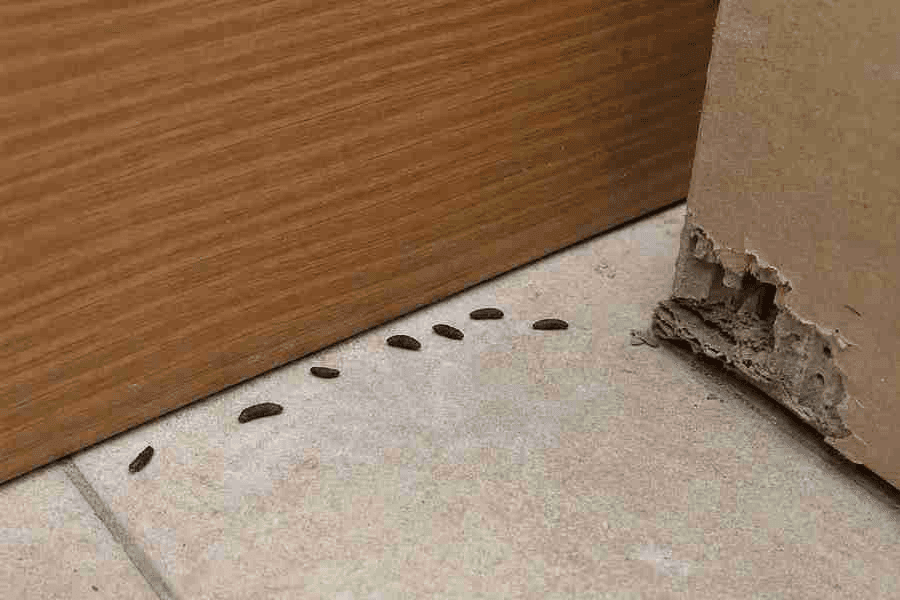
| Droppings | Under kitchen cabinets, behind the fridge, under the sink — dark, rice-grain shaped | The most direct evidence; the fresher, the softer |
| Gnaw marks | Wires, wood, food packaging | Rats need to gnaw to wear down their teeth; gnawed wiring is a safety hazard |
| Grease trails | Dark smudges along skirting boards and pipe runs | Rats travel along walls, leaving oily "traffic lines" from their fur |
| Noise | Scratching and rustling in the ceiling, walls or false ceiling at night | Rats are nocturnal; quiet by day, active at night is typical |
| Nesting material | Shredded paper or fabric piled in dark corners | A sign of nesting — not just passing through, but living there |
How do rats get in? Check every entry point
- Pipe gaps — the gaps where kitchen and bathroom pipes pass through walls are the most common entry point. Seal with steel wool plus sealant, not just expanding foam (rats can chew through it).
- Floor drains — uncovered floor drains or a dried-out U-bend trap are also a route in. Add a cover and keep the trap filled with water.
- Door gaps — an oversized gap under the front or back door; fit a door sweep.
- External walls, plants and awnings — rats can climb; branches against the wall and air-conditioning pipes are ready-made routes.
- Shared spaces — old-building refuse rooms and back stairwells are rat bases; sealing your own flat cuts off their route in.
Starve them out: make your flat not worth visiting
- Store food in sealed containers; don't leave pet food out overnight
- Use a lidded bin and empty it every night
- Don't leave dishes in the sink overnight; wipe down food crumbs on counters
- Cut down on clutter, especially cardboard boxes — fewer hiding spots means rats won't stick around
When should you call a professional?
Seeing a live rat, fresh droppings that keep appearing, or nighttime noise that doesn't stop usually means it's already more than one, and DIY glue boards or traps can't keep up with their breeding rate. Professional rat control isn't about "more bait" — it's about finding and sealing every entry point, placing bait stations or monitoring points based on the layout, and following up through a warranty period until it's actually resolved. Averta's rat control service starts from HK$1,680, with a HK$350 inspection that's fully credited when you book.