The short answer
Booklice — known locally as 卜泥, also called psocids — are tiny pale insects about 1mm long. They don't bite and don't feed on blood; they feed mainly on mould and starchy residues.
In Hong Kong, booklice generally peak during "returning-south weather" (回南天, roughly February to April), when high humidity lets mould grow — and mould is their food source. That's why spraying insecticide never really finishes the job: the key to controlling booklice isn't killing insects, it's controlling humidity.
Get relative humidity down to around 60% or below and the mould stops growing, so the booklice die out on their own.
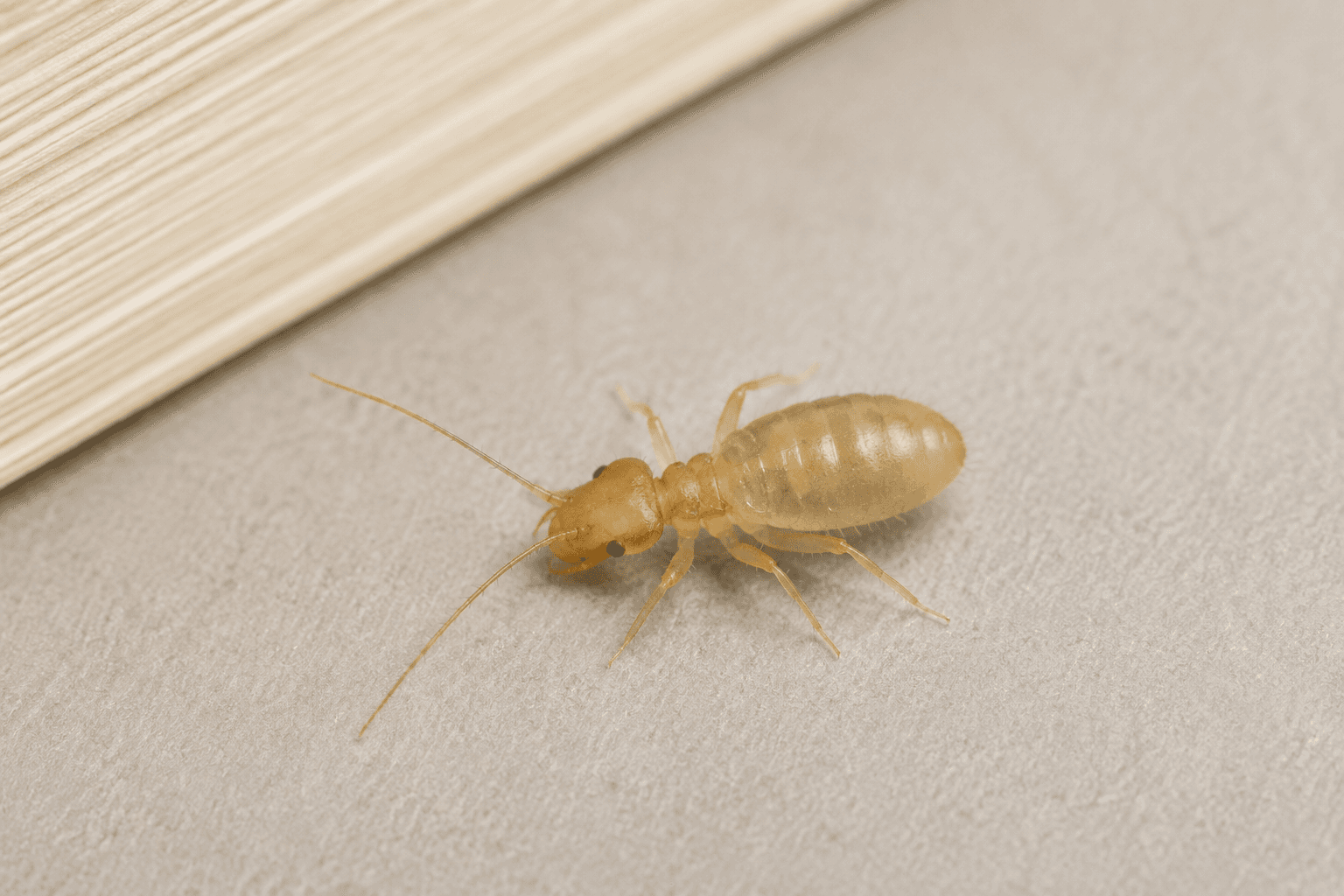
Are the bugs in your flat actually booklice?
Check against three features: size — about 1mm, pale grey to light brown, quick-moving; where they turn up — on walls (especially near skirting boards or ceiling corners), in bookshelves and books, on mattresses and bed frames, in kitchen cabinets, cardboard boxes, and on wallpaper; pattern — noticeably more in humid weather, fewer in dry weather. If what you're seeing is dark-coloured, jumps, or you have actual bite marks, that's not booklice — see our bed bug guide instead.
Why does spraying never seem to finish them off?
A common experience: you spray, a batch dies, and two weeks later there's another batch. The reason is simple: you're killing the diners, not closing the restaurant. As long as there's a layer of mould on walls, behind furniture or under the mattress — often too faint to see with the naked eye — the booklice population keeps getting resupplied. This is the basic principle behind how we approach a booklice case: find the mould source first, not the bugs.
The 4-step starvation plan
- Measure the humidity — buy a cheap hygrometer. During returning-south weather, indoor humidity in Hong Kong can easily hit 90%. The target is to keep it around 60% or below on a sustained basis.
- Dehumidify and ventilate strategically — during returning-south weather, keep windows shut and run a dehumidifier or your air-conditioner's dry mode; on dry, sunny days, open windows wide for cross-ventilation instead. Put dehumidifying boxes in problem spots — under the bed, in wardrobes, on bookshelves — and change them regularly.
- Clear the mould — wipe down any mould spots on walls, tile grout or the back of furniture with diluted bleach or a mould remover, and leave a gap between furniture and the wall for airflow.
- Sun and air things out — books, cardboard boxes and mattress pads are prime mould habitat; put them out in the sun. Throw out cardboard boxes you're not using — cardboard is basically a booklice mansion.
When should you call a professional?
Most booklice cases resolve on their own once humidity is under control. But it's worth arranging a professional inspection if: the problem is widespread across the whole flat (including on dry days), you can't find the mould source (which could mean water seepage inside a wall or a ceiling leak), or you're also seeing possible bed bug bites at the same time and need to tell the two apart. Averta approaches booklice cases by starting at the source: we check humidity distribution and mould sources (inspection HK$350, fully credited when you book), quote only if treatment is actually needed, and tell you honestly if you can handle it yourself.